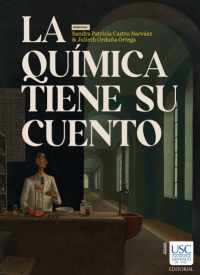
La Química tiene su cuento
Palabras clave:
Escritura creativa, enseñanza multimodal, pensamiento crítico, enseñanza estética, penetrabilidad cognitiva, química en cuentosSinopsis
Se contribuye a la implementación de estrategias didácticas centradas en la persona y multimodal que generan pensamiento critico mediante producción escrita creativa de cuentos con conceptualización química. Los cuentos tipo adaptación u original fueron gestados por estudiantes de primer semestre del Programa de Química de la Universidad Santiago de Cali con el fin de afianzar competencias de escritura. El Foro de Penetrabilidad Cognitiva establece altos porcentajes de apropiación de conceptos y procedimientos de la química. Los cuentos describieron los apartados de inicio, nudo y desenlace con integración de personajes, problemáticas y soluciones desde la química. La estrategia generó motivación en los estudiantes, fomentó la imaginación y afianzó la penetrabilidad cognitiva de fenómenos y conceptos químicos mediante la generación estética de cuentos. Los cuentos pueden ser utilizados como insumos en cursos posteriores.
Descargas
Los datos de descarga aún no están disponibles.
Biografía del autor/a
SANDRA PATRICIA CASTRO NARVAEZ, Universidad Santiago de Cali
Magíster en Ciencias – Química, con experiencia en investigación y desarrollo de materiales mediante técnicas electroquímicas y manejo de técnicas instrumentales con validación y análisis. Hace aportes en nuevos materiales, mejoramiento ambiental, electroanálisis y cuenta con liderazgo en la gestión de programas académicos en ciencias básicas. Se destaca por su compromiso con la innovación pedagógica y la promoción del aprendizaje colaborativo, integrando metodologías activas que fortalecen el pensamiento crítico e incorporan diversas perspectivas, incluida la artística.
 https://orcid.org/0000-0002-2023-8935

JULIETH ORDUÑA ORTEGA, Universidad Santiago de Cali
Doctora en ciencias químicas, especializada en química ambiental, catálisis heterogénea y valorización de subproductos agroindustriales. A lo largo de su carrera ha combinado la docencia, la investigación científica y la innovación tecnológica, contribuyendo con múltiples publicaciones de alto impacto y liderando proyectos que aplican la química para resolver problemas ambientales y mejorar procesos industriales. Su trabajo se destaca por integrar la teoría y la práctica, fomentando la formación de nuevos profesionales y promoviendo soluciones sostenibles y creativas en el ámbito de la química aplicada.
Referencias
Aoe, M., Nagata, M., Ueda, M., Kushihata, T., Kurio, W., Sone, T., & Yasuhara, T. (2022). Effect of prior knowledge and peer evaluation ratings on final exam performance in a team-based learning chemistry course. Currents in Pharmacy Teaching and Learning, 14(8), 998-1003, https://doi.org/10.1016/j.cptl.2022.07.016
Araoz, M., & Olguín, V. (2021). Una revisión sistemática sobre las experiencias lúdicas para la enseñanza de física y química en la escuela media. Revista Enseñanza de La Física, 33(3), 39–49, http://www.scielo.org.ar/scielo.php?pid=S2250-61012021000300003&script=sci_arttext.
Bhattacharjee, J. (2015). Constructivist approach to learning–an effective approach of teaching learning. International Research Journal of Interdisciplinary & Multidisciplinary Studies, 1(4), 23-28, https://oaji.net/articles/2015/1707-1438677336.pdf.
Byusa, E. Kampire, E. Rwekaza, A. (2022) Game-based learning approach on students’ motivation and understanding of chemistry concepts: A systematic review of literature, Heliyon, 8 (5) e09541, https://doi.org/10.1016/j.heliyon.2022.e09541.
Byusa, E., Kampire, E., & Mwesigye, A. R. (2020). Analysis of teaching techniques and scheme of work in teaching chemistry in Rwandan secondary schools. Eurasia Journal of Mathematics, Science and Technology Education, 16(6), em1848, https://doi.org/10.29333/ejmste/7833.
Cahyana, U., Paristiowati, M., Savitri, D. A., & Hasyrin, S. N. (2017). Developing and application of mobile game based learning (M-GBL) for high school students performance in chemistry. Eurasia Journal of Mathematics, Science and Technology Education, 13(10), 7037-7047, https://doi.org/10.12973/ejmste/78728.
Calafato, R. & Simmonds. K. (2022) Linkages between literary response, aesthetic competence, and literary competence in the EFL classroom. Studies in Educational Evaluation. 75 101214, https://doi.org/10.1016/j.stueduc.2022.101214
Cano Arroyo Tutor, P. (2021). Eficacia del uso del" Storytelling" como recurso educativo en el aula de secundaria para la enseñanza de la física y química. Máster universitario en profesor de educación secundaria obligatoria y bachillerato, formación profesional y enseñanzas de idiomas. Universidad de Valladolid. 43p, https://uvadoc.uva.es/handle/10324/57648
Collie, R. J., Martin, A. J., Morin, A. J., Malmberg, L. E., & Sammons, P. (2021). A multilevel person-centered examination of teachers' workplace experiences: Replication and extension with links to instructional support and achievement. Frontiers in Psychology, 12, 711173, https://doi.org/10.3389/fpsyg.2021.711173.
da Silva Junior, J. N., Lima, M. A. S., Pimenta, A. T. A., Nunes, F. M., Monteiro, Á. C., de Sousa, U. S., ... & Winum, J. Y. (2021). Design, implementation, and evaluation of a game-based application for aiding chemical engineering and chemistry students to review the organic reactions. Education for Chemical Engineers, 34, 106-114, https://doi.org/10.1016/j.ece.2020.11.007.
Dean, C. G. P., Grossman, P., Enumah, L., Herrmann, Z., & Kavanagh, S. S. (2023). Core practices for project-based learning: Learning from experienced practitioners in the United States. Teaching and Teacher Education, 133, 104275, https://doi.org/10.1016/j.tate.2023.104275.
Dorimana, A., Uworwabayeho, A., & Nizeyimana, G. (2021). Examining mathematical problem-solving beliefs among rwandan secondary school teachers. International Journal of Learning, Teaching and Educational Research, 20(7), 227-240, https://doi.org/10.26803/ijlter.20.7.13.
Easton, G. (2016). How medical teachers use narratives in lectures: a qualitative study. BMC Medical Education, 16, 1-12, https://doi.org/10.1186/s12909-015-0498-8.
Erman, E. (2017). Factors contributing to students’ misconceptions in learning covalent bonds. Journal of Research in Science Teaching, 54(4), 520-537, https://doi.org/10.1002/tea.21375.
Flanagan, S. (2014). How does storytelling within higher education contribute to the learning experience of early years students?. The Journal of Practice Teaching and Learning, 13(2-3), 162-184, https://doi.org/10.1921/jpts.v13i2-3.822.
Glynn, S. M., Taasoobshirazi, G., & Brickman, P. (2009). Science motivation questionnaire: Construct validation with nonscience majors. Journal of Research in Science Teaching: The Official Journal of the National Association for Research in Science Teaching, 46(2), 127-146, https://doi.org/10.1002/tea.20267.
Gutiérrez-Cardoso, N. (2018). Textos multimodales y su apoyo a la creación e interacción en el entorno educativo. Revista Praxis, Educación y Pedagogía, 68 – 95, https:// gale.com/apps/doc/A647536190/IFME? u=anon~a680ea3a&sid=googleScholar&xid=a1bf2952.
Kara, N. (2021). A systematic review of the use of serious games in science education. Contemporary Educational Technology, 13(2), ep295, https://doi.org/10.30935/cedtech/9608.
Kleinmintz, O. M., Ivancovsky, T., & Shamay-Tsoory, S. G. (2019). The two-fold model of creativity: the neural underpinnings of the generation and evaluation of creative ideas. Current Opinion in Behavioral Sciences, 27, 131-138, https://doi.org/10.1016/j.cobeha.2018.11.004.
Lagos-Guerrero, C. V. (2020). El cuento como estrategia pedagógica y didáctica para la enseñanza en Química. Revista Criterios, 27(2), 91–112. https://doi.org/10.31948/rev.criterios/27.2-art4
Lagunilla, L., & Tinajero, C. (2017). Química lúdica. Jóvenes En La Ciencia, Revista de Divulgación Científica, 3(2), 1978–1982, https://www.jovenesenlaciencia.ugto.mx/index.php/jovenesenlaciencia/arti cle/view/2915.
McNett, G. (2016). Using stories to facilitate learning. College Teaching, 64(4), 184-193, https://doi.org/10.1080/87567555.2016.1189389.
Nesi, H., & Alsop, S. (2021). Stories and scenarios: Lecturers’ use of fantastic hypothetical events. Journal of English for Academic Purposes, 53, 101022, https://doi.org/10.1016/j.jeap.2021.101022.
North, B., Diab, M., Lameras, P., Zaraik, J., Philippe, S., Müller, J., & Fischer, H. (2021, April). Developing a platform for using game-based learning in vocational education and training. In 2021 IEEE Global Engineering Education Conference (EDUCON) (pp. 1345-1352). IEEE, 10.1109/EDUCON46332.2021.9454124.
Okolie, J. A. (2022). Embedding equity, diversity, and inclusivity while teaching organic chemistry lab: An instructor’s perspective. Matter, 5(8), 2390-2392, https://doi.org/10.1016/j.matt.2022.06.059
Segura-Bermúdez, L., Carvajal, M. P. H., & Garcés, M. F. M. (2021). Los textos multimodales una estrategia didáctica para la inclusión educativa. Assensus, 6(11), 72-91, https://doi.org/10.21897/assensus.2452.
Sibomana, A., Karegeya, C., & Sentongo, J. (2021). Effect of Cooperative Learning on Chemistry Students' Achievement in Rwandan Day-Upper Secondary Schools. European Journal of Educational Research, 10(4), 2079-2088, https://eric.ed.gov/?id=EJ1318346.
Sternberg, R. J. (2010). Teaching for creativity. In R. A. Beghetto & J. C. Kaufman (Eds.), Nurturing creativity in the classroom (pp. 394–414). Cambridge University Press, https://doi.org/10.1017/CBO9780511781629.020.
Publicado
mayo 12, 2026
Colección
Derechos de autor 2026 Editorial Universidad Santiago de Cali